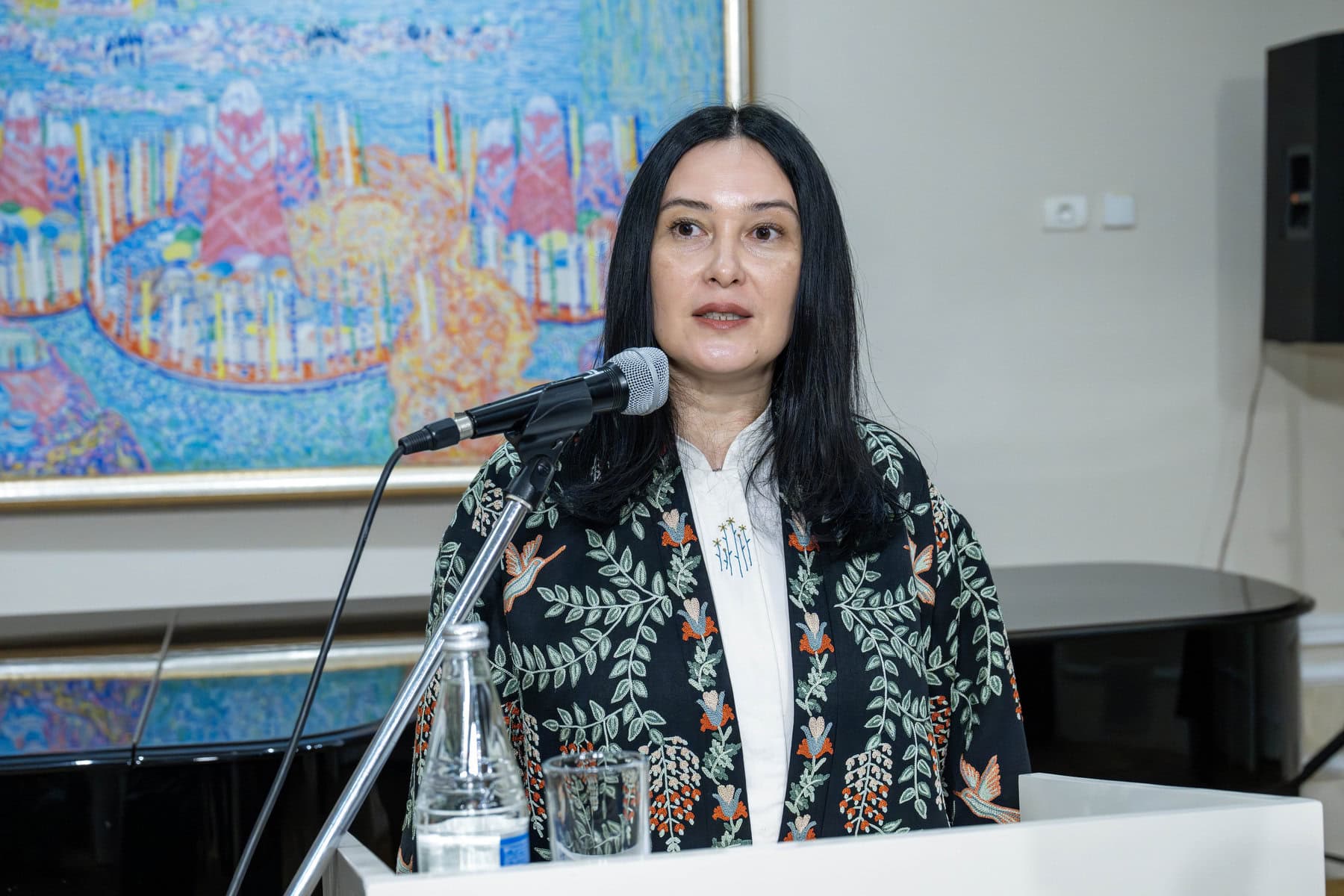
By Shirin Melikova, Director, Azerbaijan National Museum of Art
The exhibition “The Birth of Suzani: The Story of an Embroiderer” has opened 13 March 2026 at the Azerbaijan National Museum of Art. It is dedicated to the work of the Uzbek artist Madina Kasimbayeva and to the revival of the Tashkent school of traditional embroidery. The project has been organised by the Ministry of Culture of the Republic of Azerbaijan and the Azerbaijan National Museum of Art with the support of the Embassy of Uzbekistan in Azerbaijan and the “Hunarmand” Association of the Republic of Uzbekistan. The exhibition is curated by Binavsha Nodir, PhD in Art History.
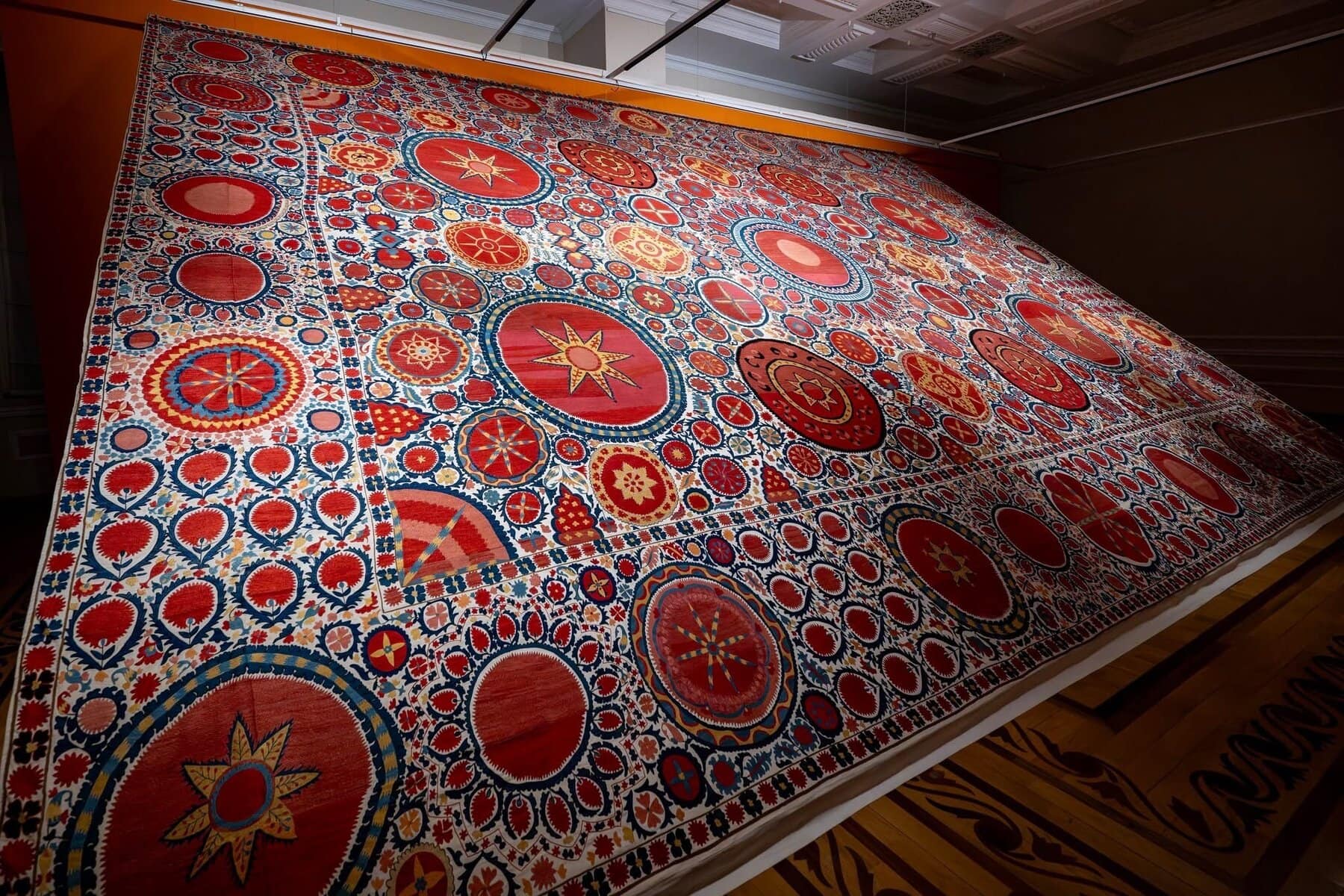
The idea of presenting this exhibition in Baku emerged several years ago. In 2022, I had the opportunity to serve as a member of the international jury of the Tashkent Biennale of Applied Arts. It was there that the project by Madina Kasimbayeva and Binafsha Nodir was awarded the Grand Prix. I clearly remember the strong impression the project made on me: it brought together a deep fidelity to tradition with the vibrant energy of contemporary artistic thinking. Since then, I have dreamed of presenting this remarkable beauty to the Azerbaijani public.The exhibition at our museum is not merely a presentation of a traditional craft. It is a story of how an ancient artistic tradition continues to live and develop in the modern world. Here, suzani appears not as a museum relic of the past, but as a living language of decorative art that preserves the connection between generations.
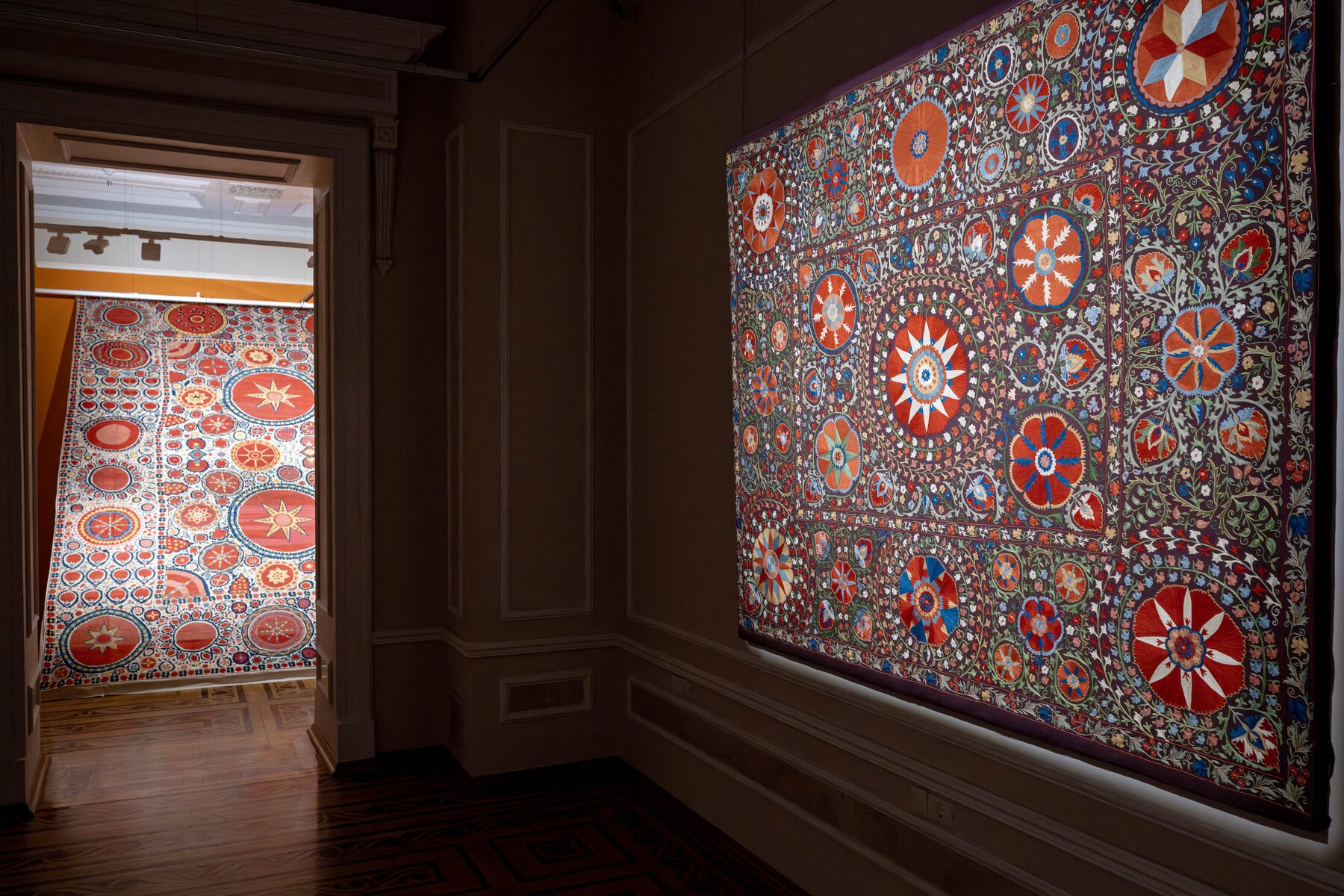
The central work of the exhibition is the monumental suzani “Oy-palyak” (“Heavens”), measuring 5.30 by 8 metres — one of the largest works of contemporary Uzbek embroidery. Its ornamentation can be perceived as a complex system of cosmological symbols. The composition resembles a kind of map of the universe: concentric medallions form a rhythmic structure, while the central rosette symbolises the sun — the source of light and vital energy.
The work was created by Madina Kasimbayeva together with fifteen of her apprentices over a period of three and a half years. The process followed the traditional ustoz–shogird system — an ancient method of learning based on the transmission of mastery from teacher to apprentice. For centuries, artistic workshops throughout the East functioned in precisely this way.
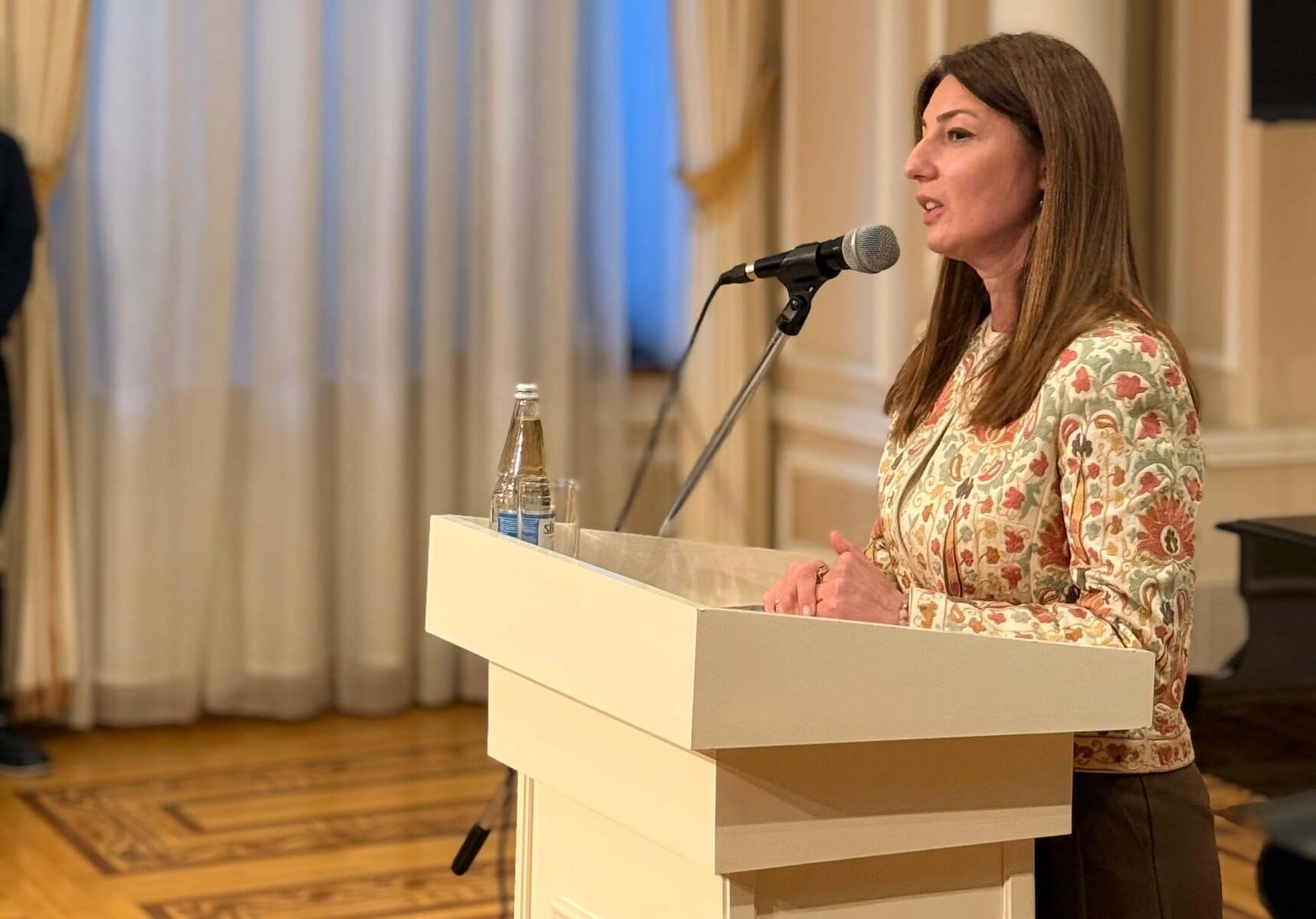
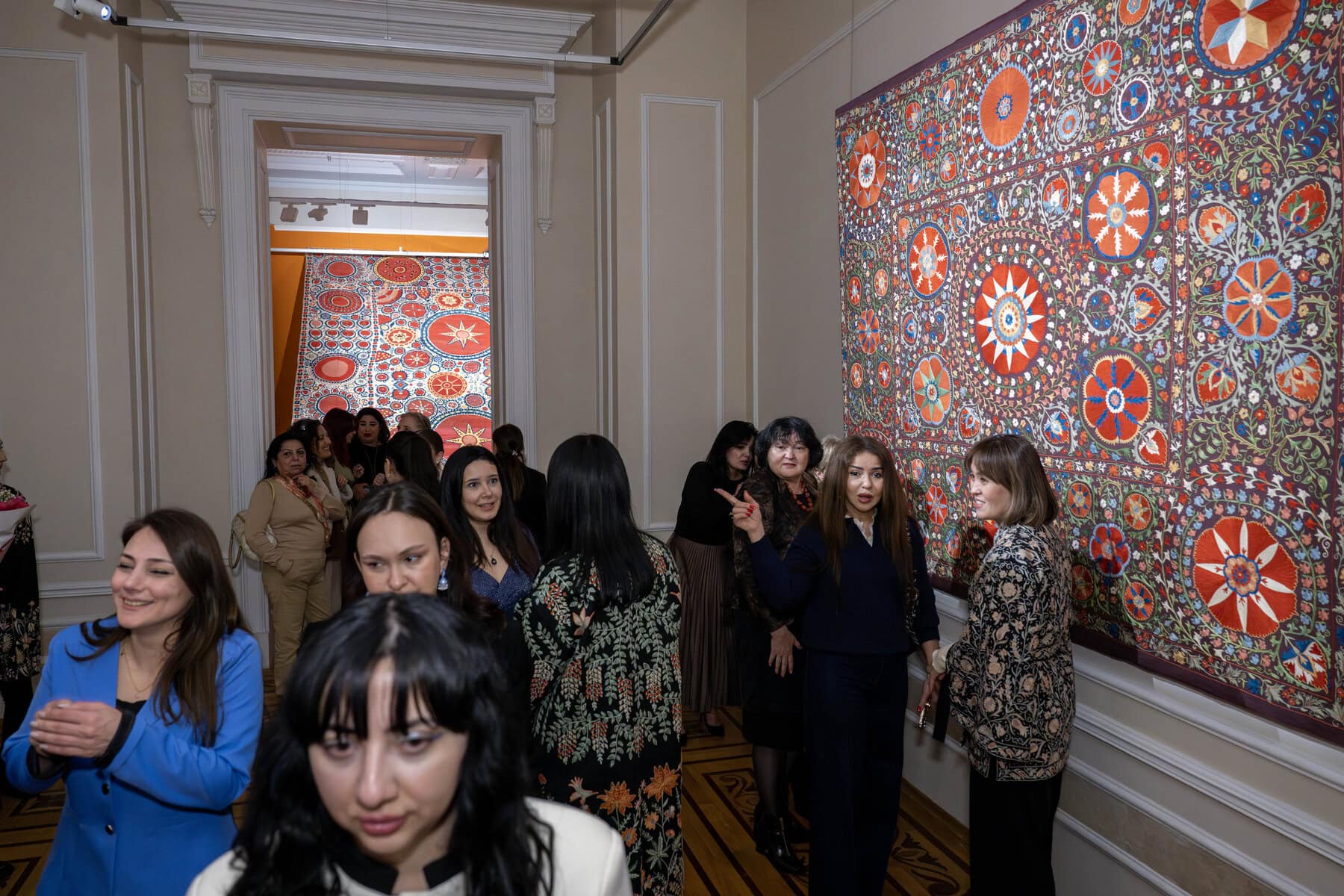
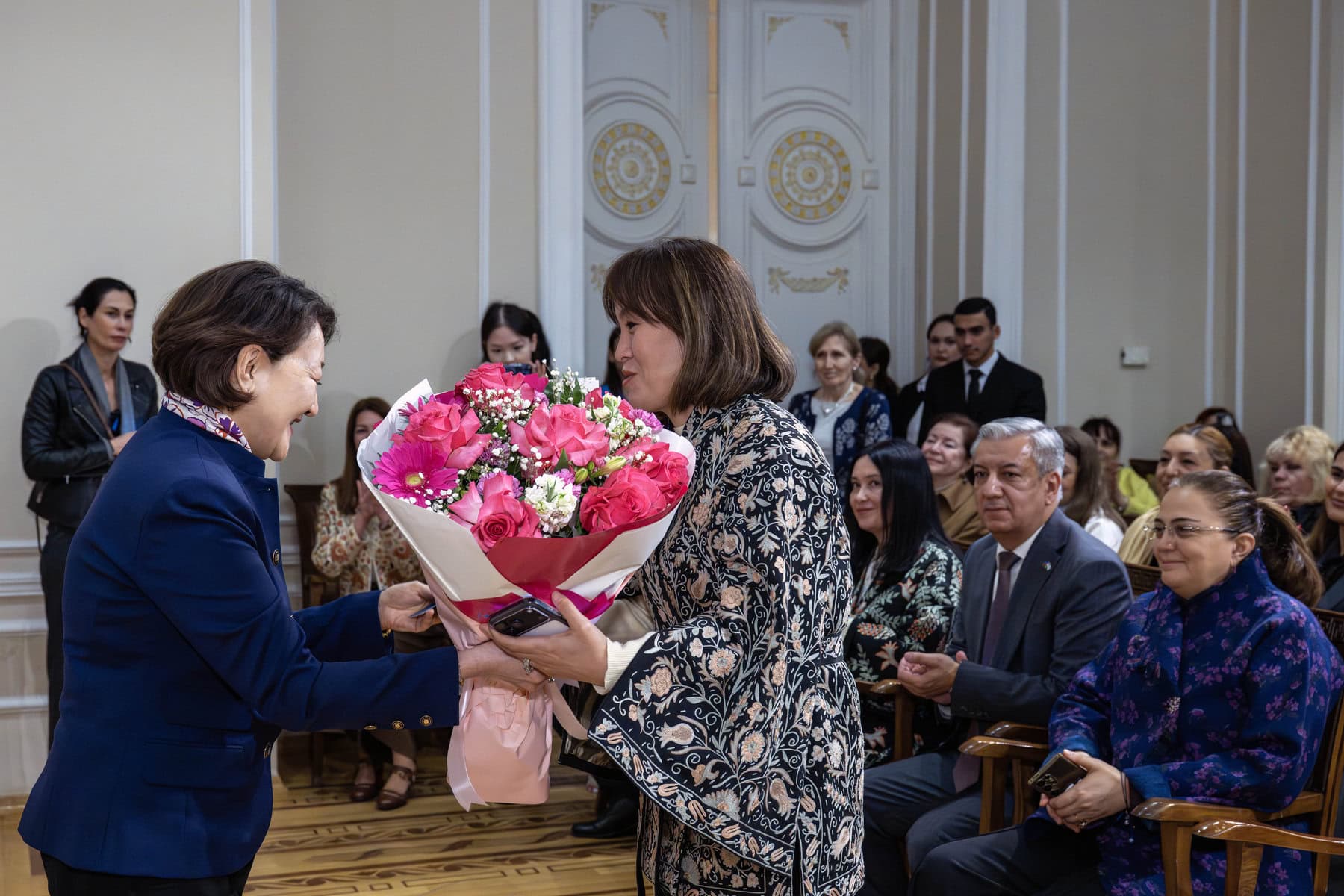
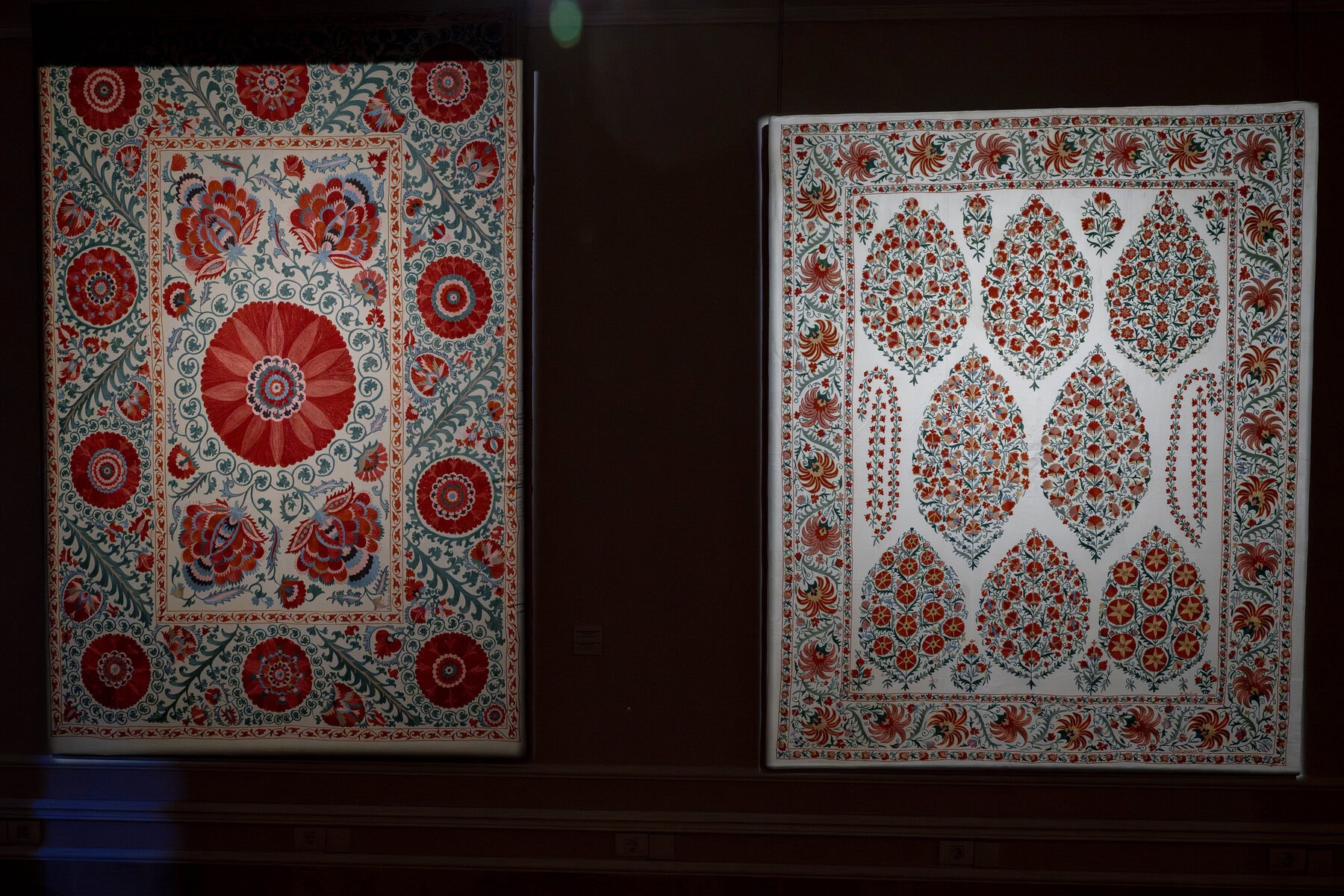
Of particular interest is the fact that the exhibition reveals to the viewer the very process of creating the work. The display includes panels with fragments of embroidery that allow visitors to observe how an ornamental concept gradually evolves into a completed artistic work. The project is further complemented by a documentary film about the creation of the suzani and an animated piece titled “Madina’s Universe”, in which the motifs of the embroidery come to life and form endless ornamental compositions.
The exhibition is truly mesmerising. Twenty hand-embroidered panels transport the viewer into a world of remarkable harmony. One cannot but admire the subtlety of the colour combinations, the elegance of the compositions and the precision with which every flower and every curl is integrated into the overall rhythm of the ornament. What we witness here is craftsmanship of the highest order — the kind associated with genuine masterpieces of decorative art.
Madina Kasimbayeva is not only a talented artist but also a mentor who is shaping an entire school of suzani in contemporary Uzbekistan. This school continues the traditions of the historic workshops where works of luxury and great artistic refinement were once created.
An important role in the realisation of the project was played by the exhibition’s curator, Binafsha Nodir, who for many years has supported and guided the creative path of the artist. To a great extent, it is thanks to her vision and research that the project has achieved the depth and artistic coherence that we can now appreciate within the museum space.
The project “The Birth of Suzani: The Story of an Embroiderer” reminds us that cultural heritage is not merely a memory of the past. It is a living source of artistic inspiration that continues to shape contemporary culture and is passed down from generation to generation.
I sincerely invite the Azerbaijani public to discover this remarkable art. The exhibition will remain on view at the Azerbaijan National Museum of Art until 30 April 2026.
Shirin Melikova, Director, Azerbaijan National Museum of Art