This article is part of Jozan Magazine’s ongoing series of personal portraits from the oriental rug world, highlighting the experiences and perspectives of dealers, researchers, and experts.
Peter Bichler is founding member of the Austrian Society for Textile-Art-Research (TKF – Die Gesellschaft zur Förderung der Textil-Kunst-Forschung), and has served on the board for 40 years, and has been president of TKF for a total of 18 years. He is a member of the Executive Committee of the ICOC and Chair of the ICOC International Committee.
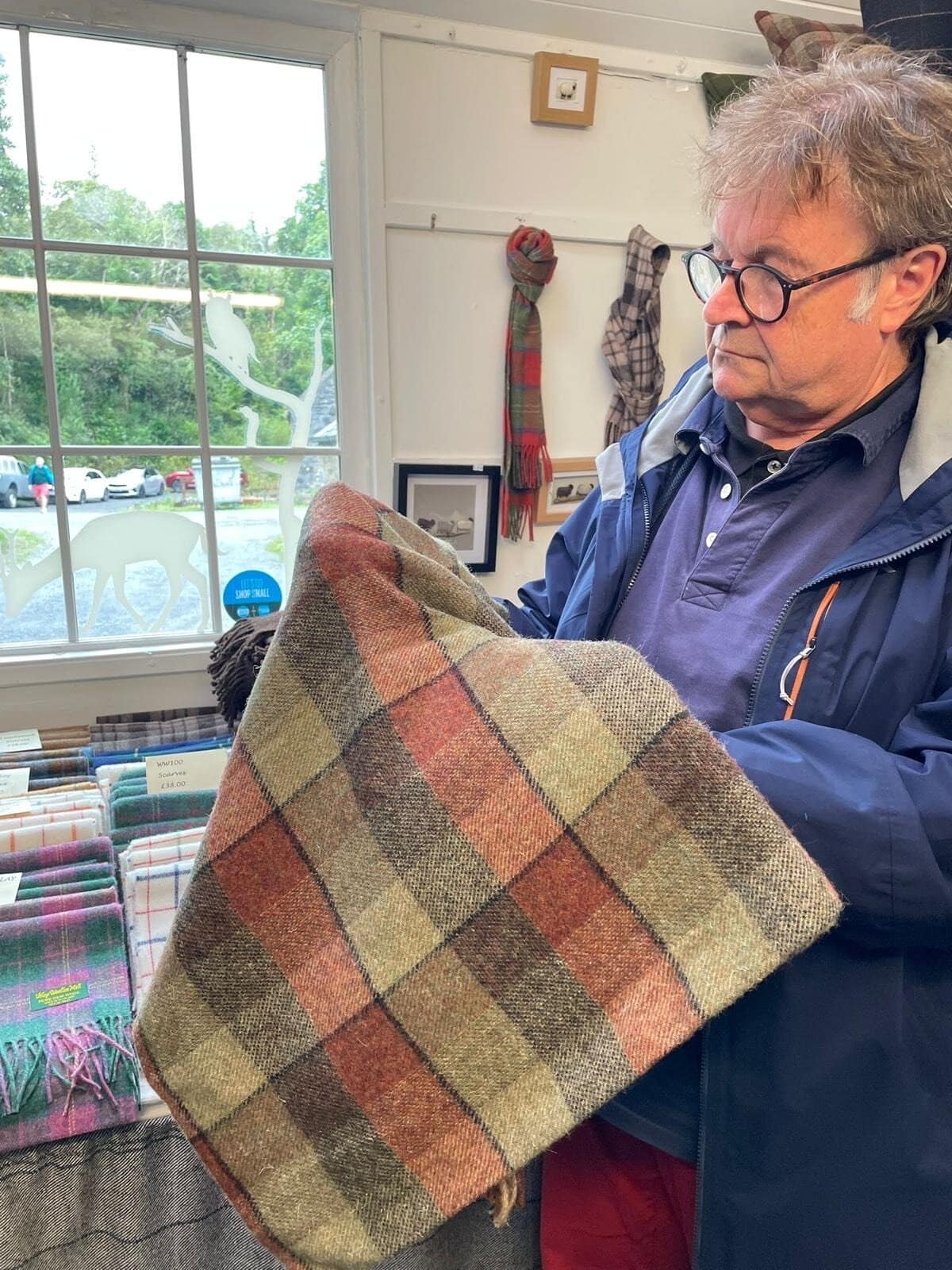
Forty-five years ago, I had the opportunity to participate in the founding of TKF in Vienna.
In the small group of curators and collectors at that time, there were not only “enthusiasts” but also members with a solid technical education in textiles, such as myself. After all, my family has been continuously involved in textiles for 250 years, beginning with my great-great-great… grandfather, a silk weaver from Udine, Italy.
I like to compare the founding—or rather the “birth”—of a society to the beginning, development, growth, and maturation of an organism, and the accompanying necessary changes in its self-understanding and outward reflection.
At the beginning stands the cautious exploration full of joy among a group of like-minded individuals. After this initial acquaintance, it is essential to articulate short- and long-term goals and visions to strengthen cohesion and reflect on the meaningfulness of the undertaking. Seeking purpose solely in itself would be self-will, which would only promote physical and mental isolation. Instead, one should strive to realize and promote the potential for fulfillment, in the Aristotelian sense of entelechy.
In practice, this manifested relatively early with the organization of the 5th ICOC Vienna–Budapest in 1986. It was a tremendous task to hold a conference with 700 participants in two capitals simultaneously—especially since Budapest was still behind the Iron Curtain and no financial resources were available. This event placed TKF in the international spotlight.
The growth and maturation of the organization through lectures, exhibitions, workshops, and the like are joys, but also the “labors of the plains” that are significant for the character formation and reputation of the society. At this stage, I was particularly committed to fostering contact with museums, universities, and international institutions. Cooperations with UNESCO, the British Council, the ICOC, and also with the Natural History Museum Vienna, the MAK, the University of Applied Arts Vienna, and the Museum of Ethnology Vienna were trust-building measures and led to mutually beneficial results.
The longer a society exists, the more noticeably its membership, interests, and collecting perspectives change. Trends—or even fashions—have repeatedly formed new focal points in the past: temporary increased interest in kilims, Caucasians, Turkmen, bags, Gabbehs, and much more has drawn attention. Today’s highly appealing interest in ethnological textiles—so to speak, “looking beyond the edge of the carpet”—is becoming an increasingly rewarding and exciting adventure for textile enthusiasts.
However, the conscious formation of a classical collection is largely in decline. We can see the effects worldwide in the crisis of the carpet and textile trade, galleries, and the erosion of prices for good collector items in the mid-range quality segment.
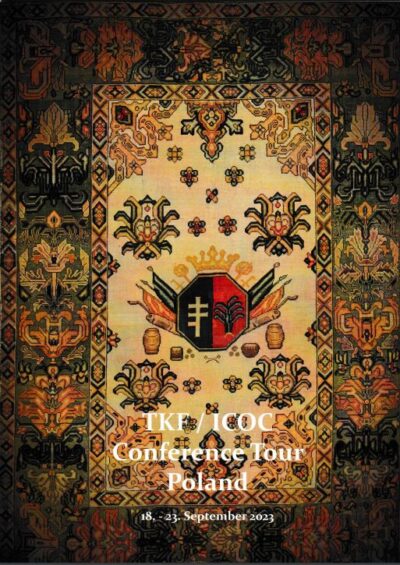
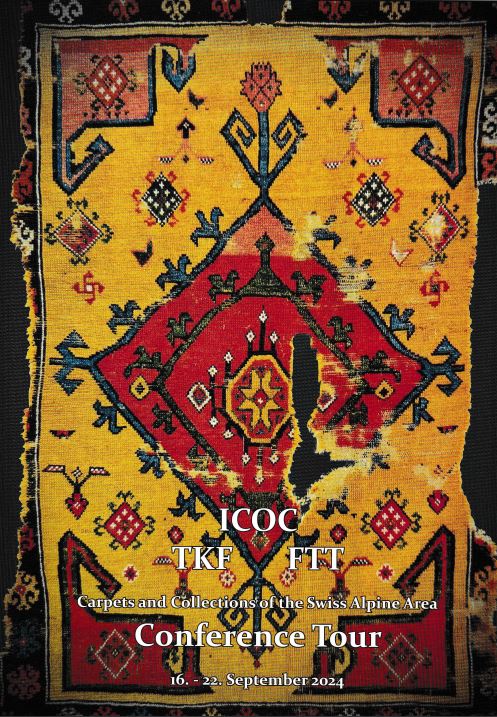
This development has not passed the ICOC by either, where the traditional format of the conference in its “old style” is attracting fewer and fewer participants. As a remedy, a “total experience” has emerged, where textiles and carpets remain at the center, but the cultural and geographical identity and history of the visited region are also conveyed during the so-called conference tours.
Relevant national and international events of this kind have been and remain excellent opportunities to involve young people and allow students to present their work—as TKF has already practiced several times during ICOC tours. The promotion of students, sometimes with financial support, is also an important part of TKF’s non-profit orientation.
In the current tight budgetary situation in the Western world and the resulting dwindling resources for museums, collaboration with museums and relevant institutions should become increasingly important. Not only in terms of sponsoring the purchase or restoration of individual objects but also in terms of PR, joint membership programs, expert lectures, and similar initiatives.
There is now also reason for hope in Vienna’s more traditional museum scene, where curators at the Weltmuseum and the MAK are increasingly and successfully focusing on textiles and carpets. In 2026, the MAK will present the newly arranged carpet and textile collection. The reopening of the Vienna Museum of Folk Life and Folk Art with its significant costume and traditional dress collection, following completed renovations, will also give a strong impulse in the right direction. TKF is already looking forward to a fruitful collaboration.
–
Interview conducted by Ivan Soenderholm for Jozan Magazine. Translated and edited with permission from Peter Bichler.
TKF – Die Gesellschaft zur Förderung der Textil-Kunst-Forschung – email Peter Bichler bichler.austria@pgv.at