Ceremonial Use of Textiles in Toraja
Preface: This note outlines the field exploration by Jaina Mishra undertaken specifically to understand the current-day use of textiles in ceremonies in Toraja. Designed to answer the questions of authenticity and purpose, this field trip led to enlightening real life experiences in which textile arts were intertwined with the culture. This note is an attempt to narrate those experiences.
***
OBJECTIVES
When beholding a work of art, the first aspect that strikes us is the visual and we take in the motifs, the colors, the drawing etc. Then after our eyes have been delighted by the vision, we begin to notice the craft and explore the technical aspects i.e. the construction, the materials used, the crafting techniques and so on. The craft speaks to our mind and stimulates our intellect. Usually, these two aspects are sufficient to awe us. But in most arts from Asia, beneath these two layers lies an additional layer – the cultural paradigm. This layer is not immediately obvious and requires a conversation with the users to understand it.
It is this layer that offers us the backstory of traditional usage for that category of art and makes the art more interesting. It is pursuit of this story that drew me to Toraja.
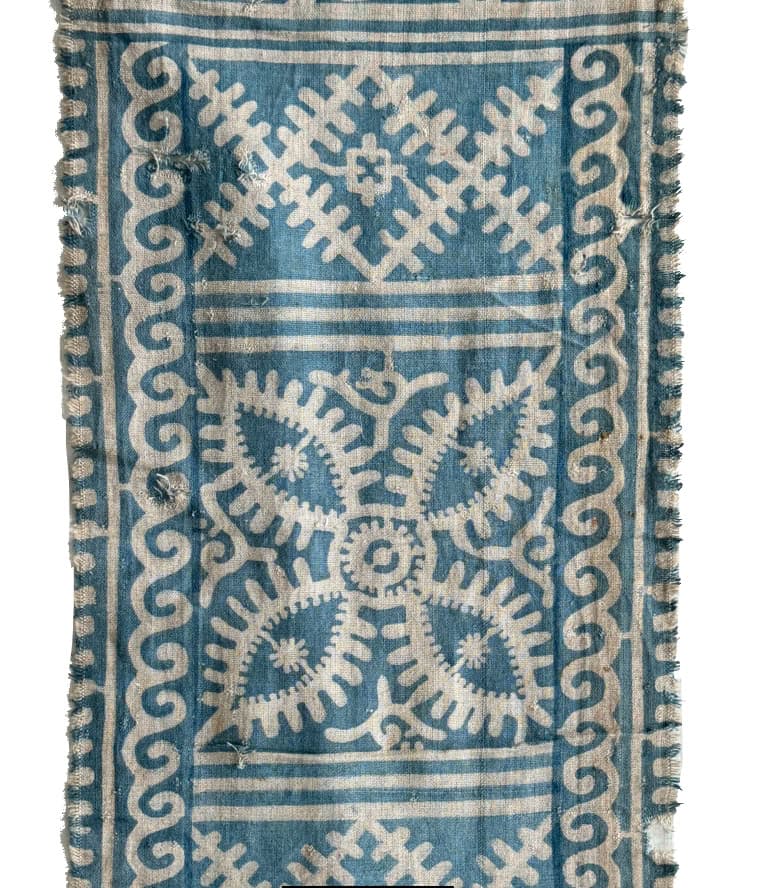
So let’s begin at the beginning: A while ago, I came across this textile that was called “a ceremonial textile from Toraja” by dealers.

The drawing format in this textile is similar to that of museum textiles from the 16th century that were made in Gujarat, India and exported to Indonesia. It differs from the museum in two aspects. Firstly, it was much younger and secondly the figures have a distinct Indonesian character with angular faces.

This had led to a debate about the authenticity of the first textile. And that led to further questions on how ‘authenticity’ is defined. In my view, the most important factor that confirms the authenticity of a traditional ceremonial textile or artefact is the purpose of creation and the end-use within the cultural context.
While all published material and museums called these ‘ceremonial textiles’, unfortunately, I could find no publication that described the actual ceremonies in which such textiles were used.
In my experience in various parts of Asia, I find that as life evolves, new generations introduce variations and adaptations into both, the traditions themselves and into the ceremonial artefacts being used in rituals. But even after these mutations, the essence of the original tradition is retained and remains true to the original concept.
Now Toraja is a strong, homogenous and somewhat isolated culture. So I surmised that there was a good chance that the ceremonies within which 16th century textiles were used, were part of living traditions even today.
And therefore, there was a good chance that ritual objects like such textiles, might still be in use. Even if these were not in use, these might still exist in the memory of the people there or in the histories recorded in local museums.
And so, to find answers to the question of the ‘ceremonial use’ of such textiles, for my own satisfaction or swantuh sukhaaye – as we say in Sanskrit- I embarked on a trip to Toraja.
***
OBSERVATIONS
The area marked in red is Sulawesi. It is a part of Indonesia – a country that has between 17,508 – 18,306 islands. Sulawesi in a large island that is larger than Belgium, Portugal and Netherlands combined.
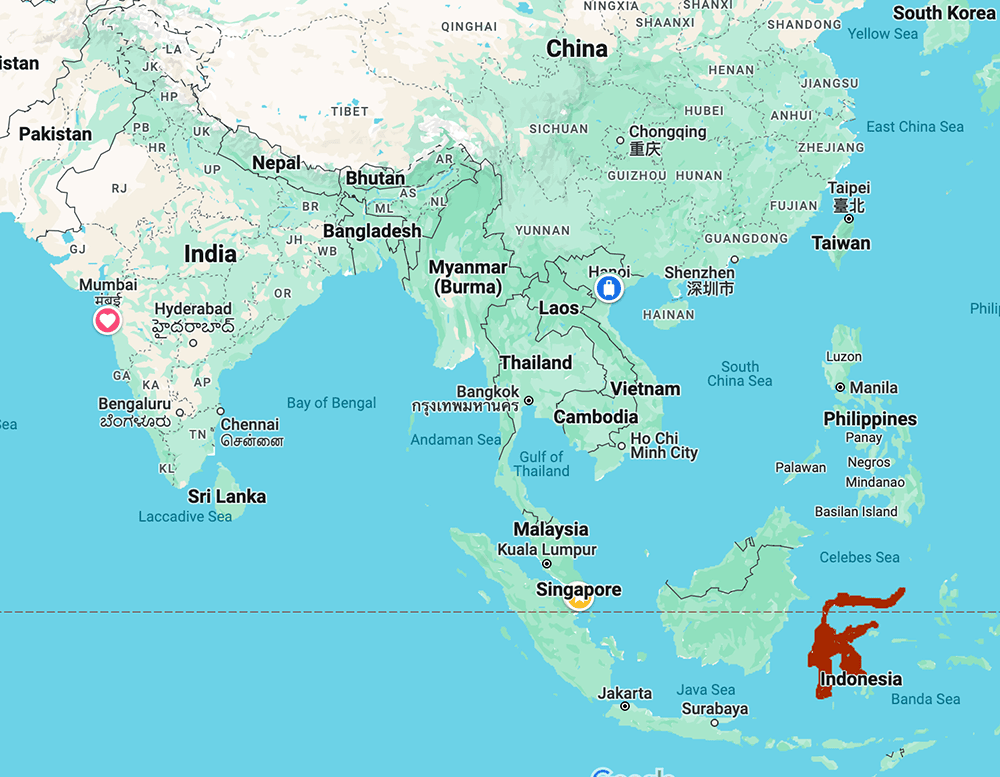
And though Toraja is just about 2000 km away from Singapore, it took me 2 flights, an overnight stay and a 10-hour road journey in rainy windy conditions witnessing several landslides along the way to reach the hills of Tana Toraja. Even in 2024, the journey was long and tedious.
I could not help but marvel at the ambition & tenacity of the traders and the depth of the supply chain that managed to reach textiles from India to Toraja in the 16th century!
***
Toraja is beautiful with its paddy fields, hills and blue skies. And to an art & cuture enthusiast, it is even more attractive as the traditional culture and art are seen thriving in every aspect of life.
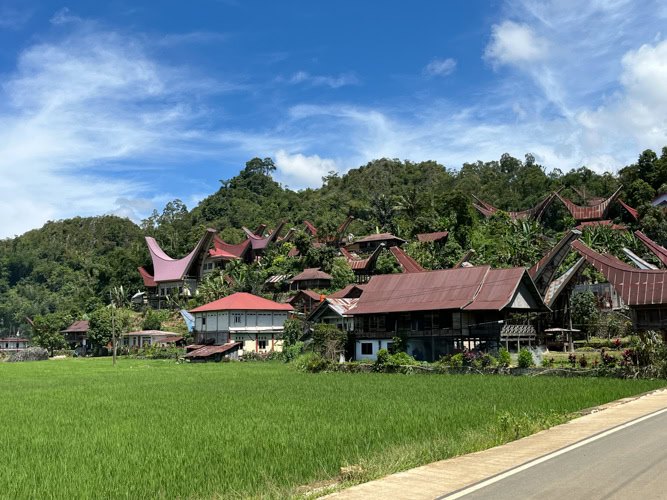
In Toraja, art is not relegated to museums – it is omnipresent. In fact, it may be said that Toraja itself is a living museum.
Toraja is dotted with villages with traditional houses called Tongkonan and rice granaries that have boat shaped roofs. These are still being built in the same architectural designs that thrived generations ago. The wooden walls are carved and painted in a striking palette of black, white and orange.
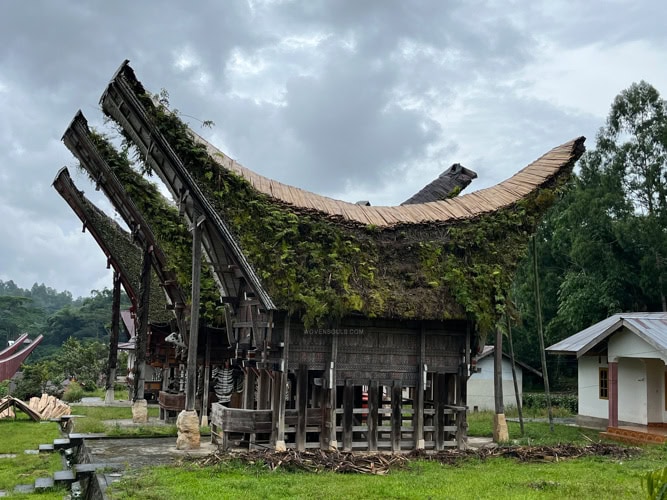
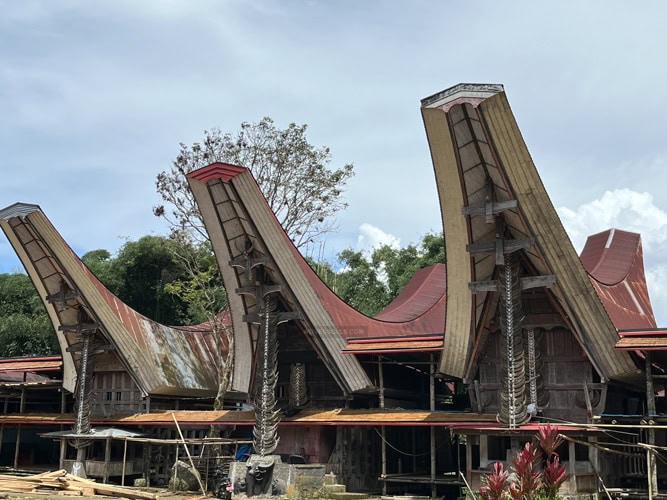
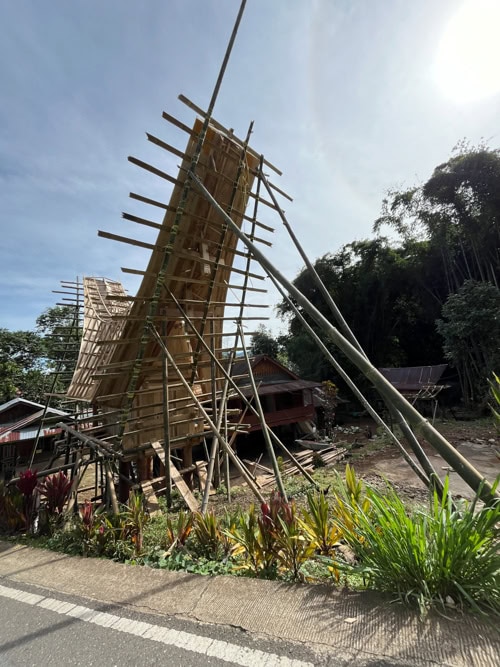

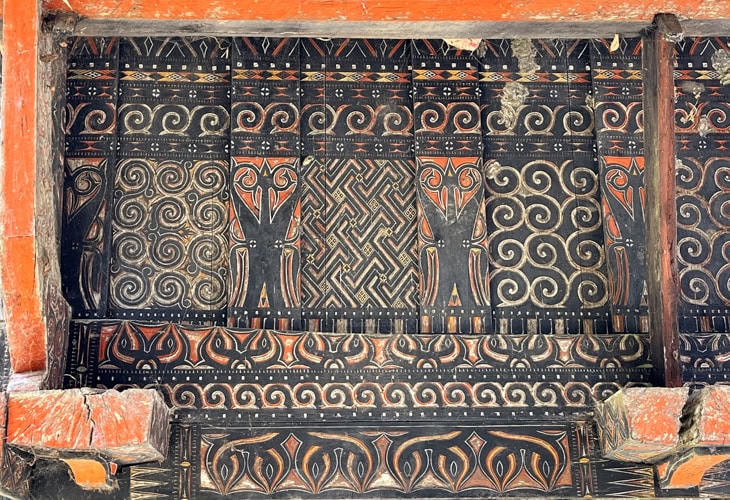
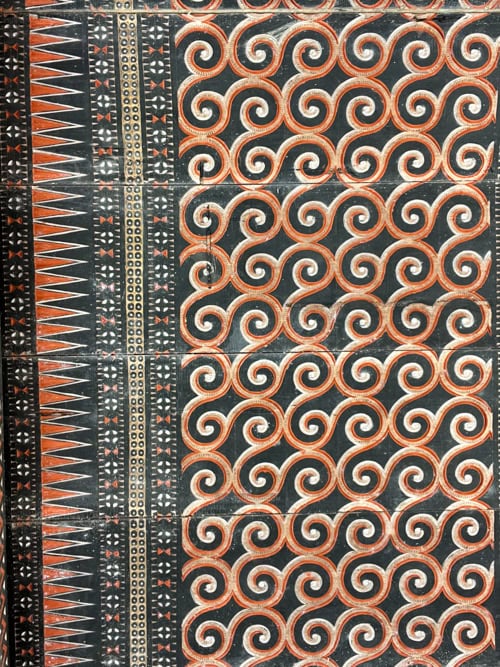
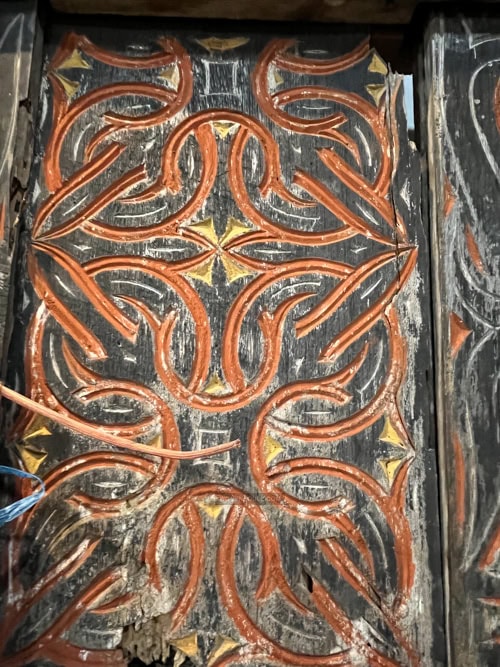
Now Toraja is unique in its culture and differs not only from the rest of the world but also from other cultures within Indonesia in many ways. But the most striking difference is the Torajan concept of death.
Every culture prescribes a unique set of rules for individuals to live life as good human beings. One subset of these rules is about dealing with death. In contrast to all the cultures I’ve been exposed to, in Toraja there is no avoidance of the subject of death – either in conversation or in thought. While other cultures see it as the end of the journey or the absolute end of life, Torajans believe that life as we know it on earth is just a part of an even longer journey of which our earthly presence is but one segment.
And so, when a person dies, one segment ends and the departed moves on to the next segment after the funeral.

To mark the end of this segment a large funeral ceremony is held in which the whole clan and village are invited to live together for several days to bid farewell to the departed. This funeral may take place a few weeks, a few months or even a few years after the death. In the interim, the body is embalmed and kept in a special room and treated as a sick person. Eventually, the funeral – which is a mega-event – is held.
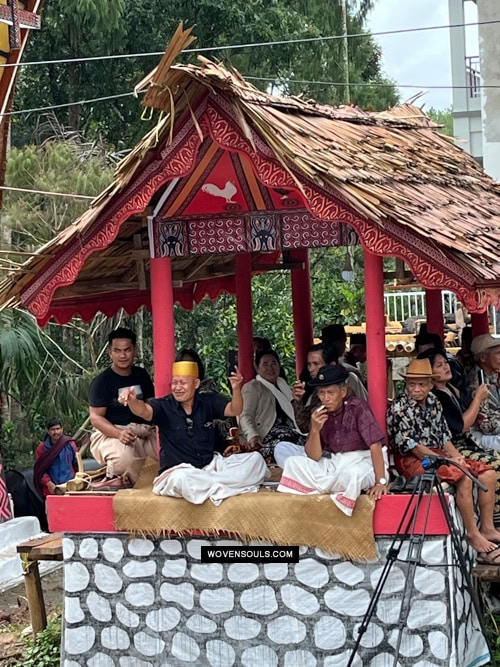
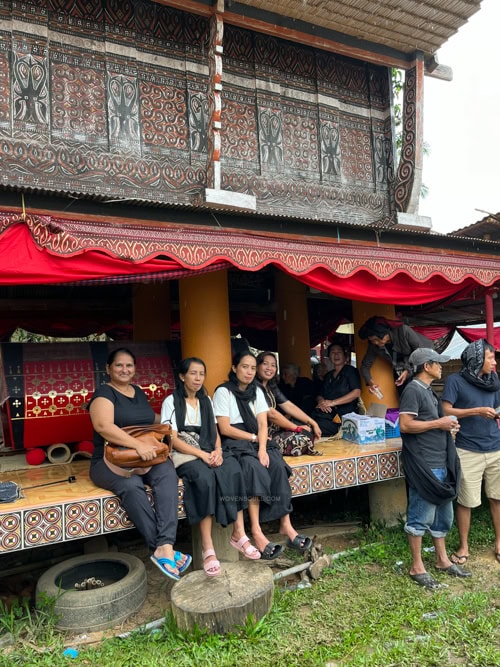
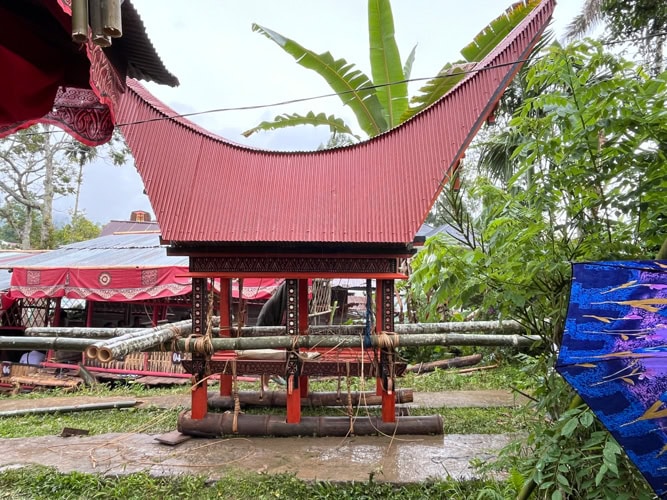
On the first day of the funeral, once all the visitors have gathered, a ceremonial procession takes place. The casket is placed in an elaborate wooden boat-shaped structure and is carried around the whole village. This enables the deceased to revisit all the places of his earthly residence one last time.
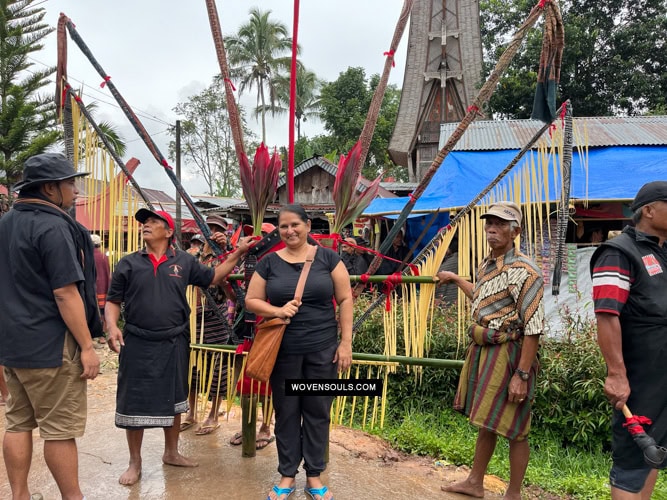
The procession consists of several segments beginning with a group of men with a large bamboo structure, followed by boys carrying flags, followed by ceremonial buffaloes and finally the family of the deceased.
This large bamboo structure has been specially created for this ceremony. Bamboos are tied in a bouquet-like arrangement and each bamboo is wrapped in an antique textile.
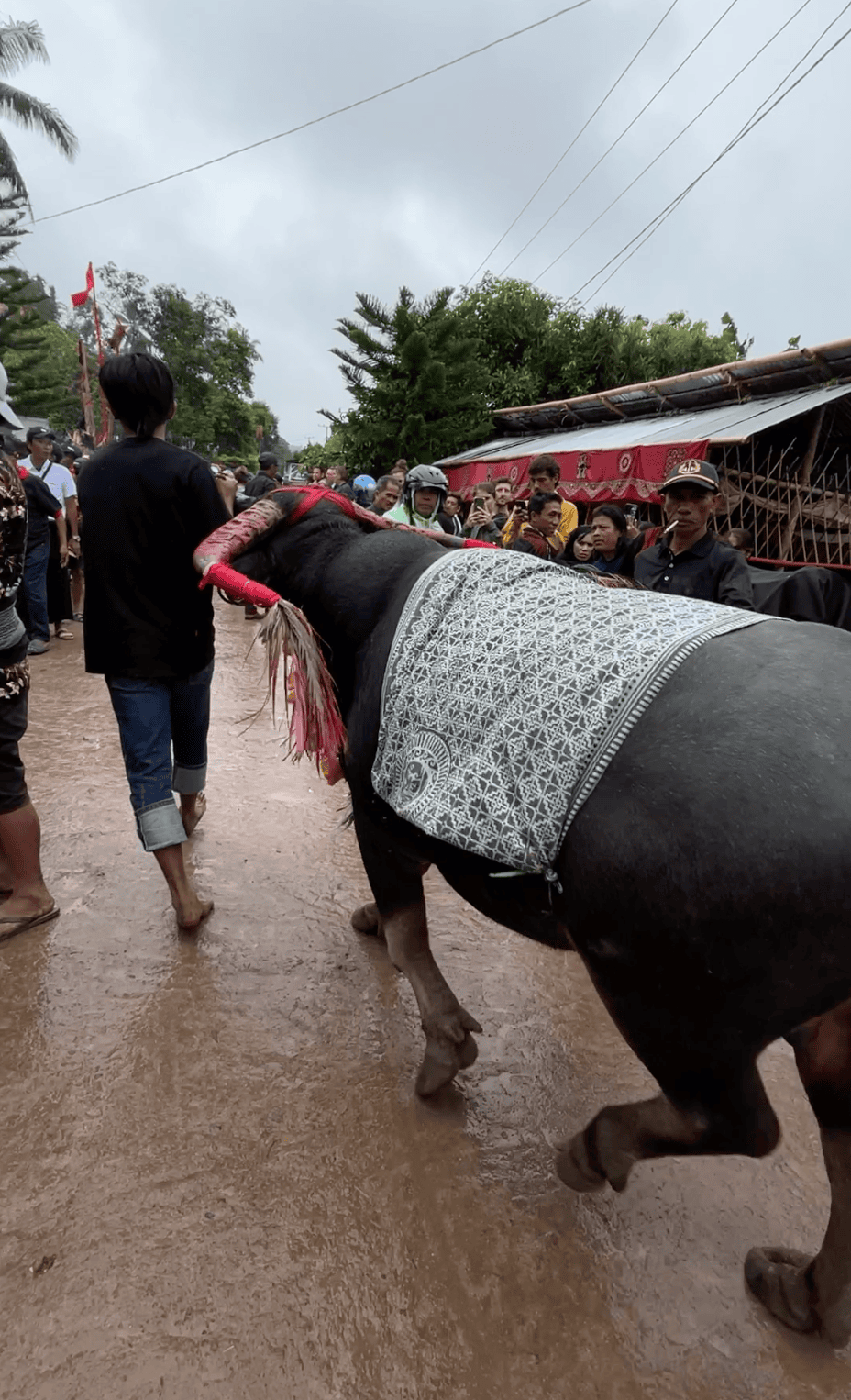
This is followed by young boys bearing flags that are the textiles called Toraja Saritas. The number of flags represents the number of buffaloes that will be offered in sacrifice for the funeral. Buffaloes are the most sacred animals in Toraja because they have the role of carrying the dead safely into the land of afterlife. As this journey to the afterlife is a long one, a single buffalo cannot fulfill the role of a guide by himself. Therefore, a minimum of 6 are usually sacrificed at the funeral and in wealthy families, this number goes up to 24.
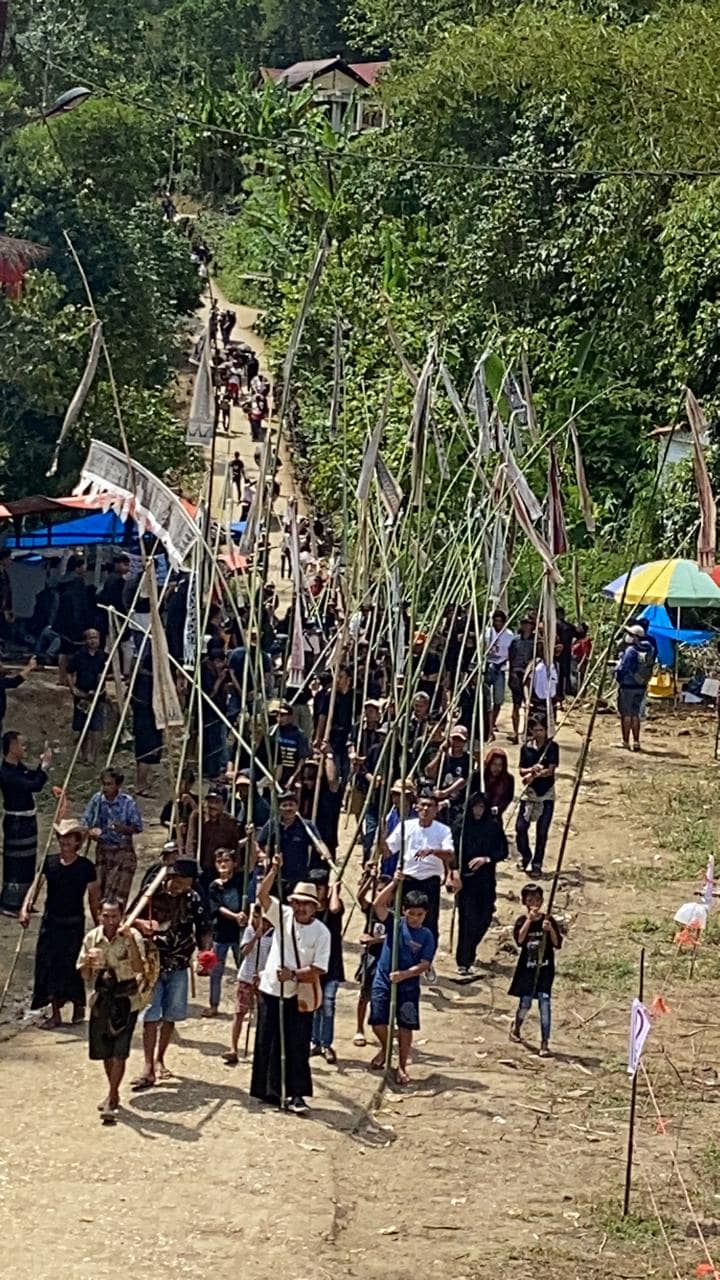
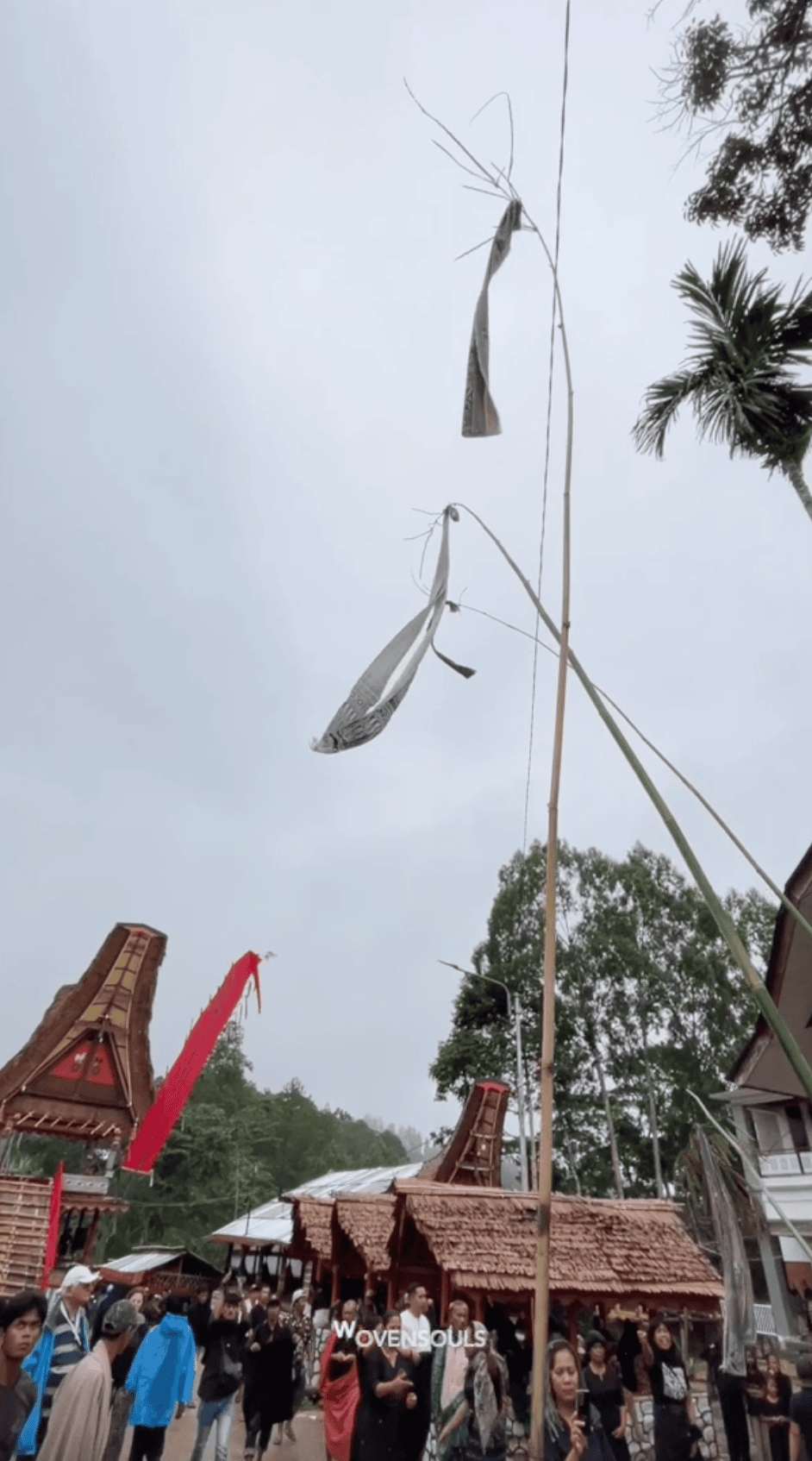
These buffaloes have received love from their owners throughout their lives and are now decorated with textiles and ornaments for this event.
This group is then followed by men, women and children, all relatives & friends of the deceased. They walk in 2 columns and together they hold up a long banner or an overhead canopy. In the pictures, the red cloth that forms the canopy is a new commercial cloth. The end of this long red textile is attached to the casket that follows last in the boat-shaped bamboo structure.
Over the years, I had heard Indonesian dealers describing these long banner cloths, including the ones with female musicians as “canopies being used in processions”. But with language barriers compounding my lack of exposure I had not completely comprehended the meaning. Seeing this procession, I knew instantly that this is what they were referring to.

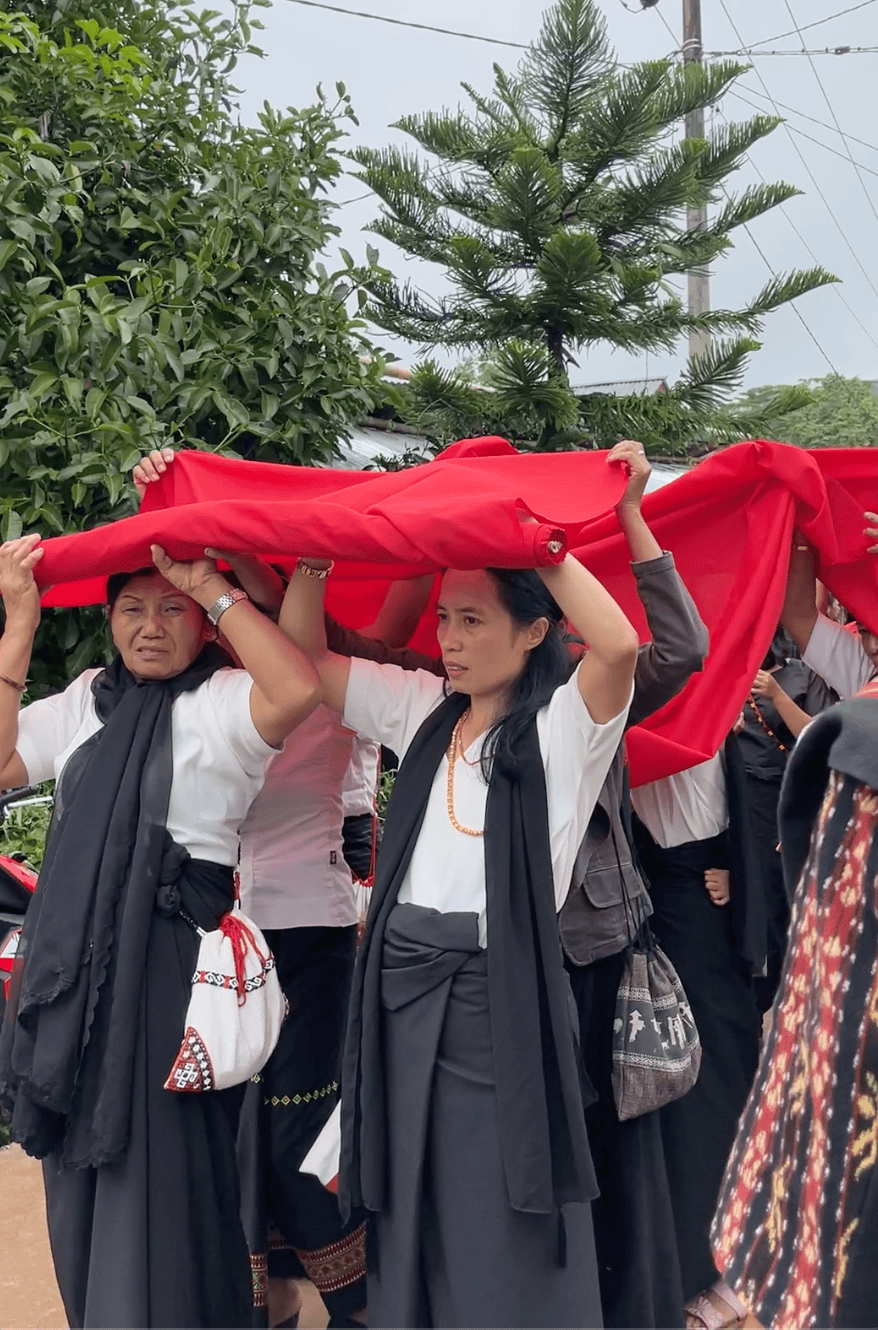
Such an elaborate arrangement for the red cloth was a deliberate one and clearly it had to have some significance beyond just the visual it presented. And so with a little probing, I learnt that the textile canopy symbolizes the bridge that beloved departed will use to go over to the other side.
The jigsaw about the ceremonial use of this textile was slowly coming together.


But one crucial piece was still missing. The red cloth in the pictures above is clearly a recently made commercial cloth.
What about old textiles of the type with a row of female musicians? After all, until we have found examples of those being used in ceremonies today, the quest for definite answers could not end.
In Hindi we have a proverb that if we seek with intense dedication even God can be found. With the help of the new network built in Toraja, this saying proved to be correct once again.
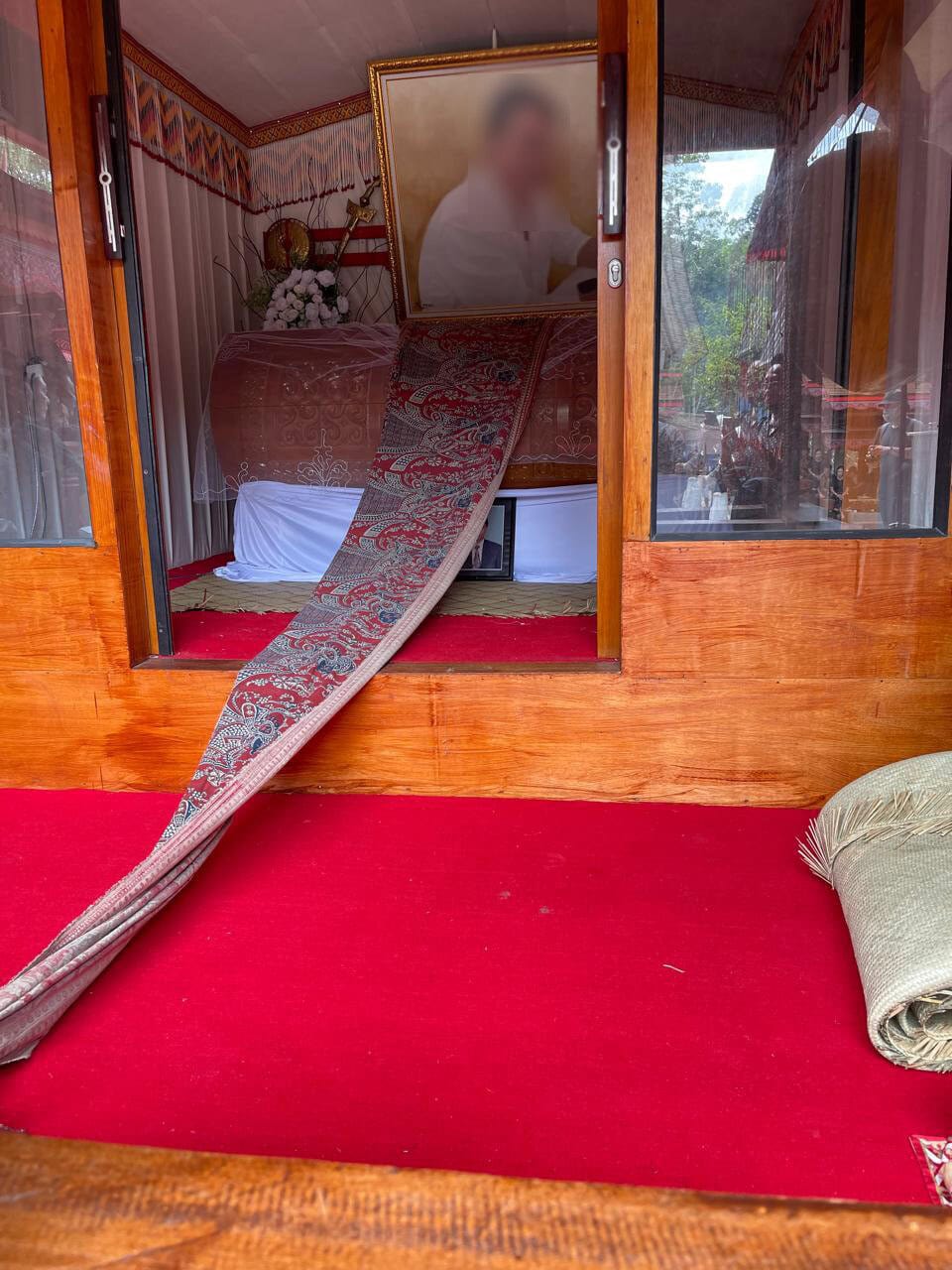
Here, a ceremonial banner with a row of musicians is seen.
Laid out, one end attached to the coffin, the other end to be held by family and friends as they help in forming the bridge to the other world
In another event, another similar textile is also seen as a ceremonial cover for the buffalo.

SUMMARY
My local guide mentioned that in olden days weaving skills did not exist in remote Toraja. So woven cloths were uncommon and very precious. So the endeavor of trading textiles with metals and local spices was a profitable endeavor.
For reasons of serendipity perhaps, it is the printed painted textiles of Gujarat that found their way there. Due to their scarcity and value, these textiles came to symbols of prestige and wealth.
The prestige that these textiles enjoyed then still lingers and antique Indian textiles are considered important heirlooms even today. Such textiles are prized by the family even if the condition of the textile is fragmentary. During other traditional ceremonies these heirlooms are proudly displayed outside the house as the all-important material wealth of the family.
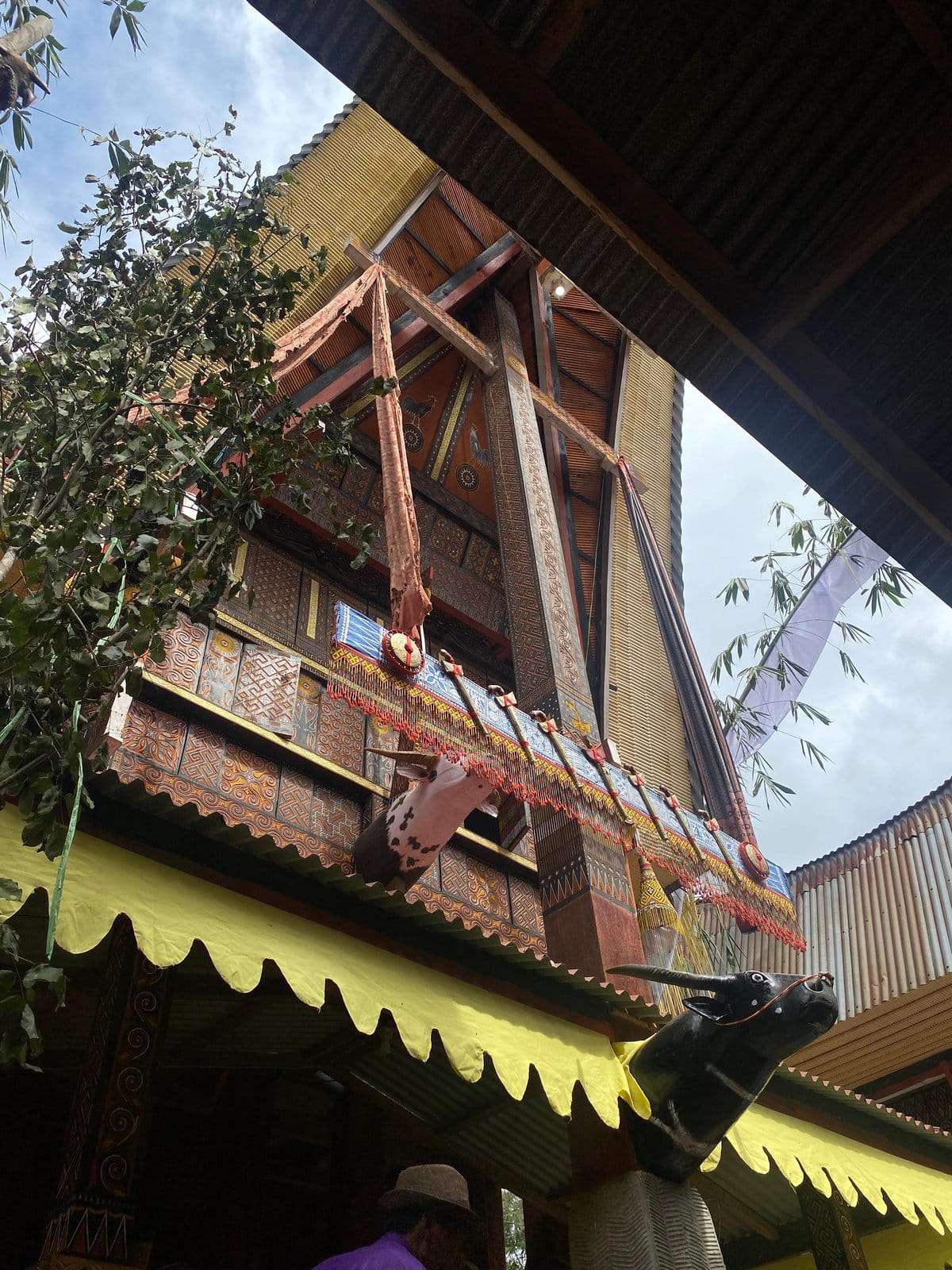
This exploration confirmed the hypotheses that in Toraja, such textiles are still being used in traditional ceremonies even today. Fortunately, culture and textile art continue to remain centre-stage in the lives of the people in Toraja, even as they move forward embracing the technological innovations of this era.
~ Jaina Mishra / Wovensouls Textile Art Gallery / wovensouls.com