This article is part of Jozan Magazine’s ongoing series of personal portraits from the oriental rug world, highlighting the experiences and perspectives of dealers, researchers, and experts.
Alberto Levi is a renowned, Milan-based antique rug and textile art dealer and scholar. Born into a family business founded by his grandfather in the late 19th century, Levi was surrounded by carpets from a young age. After initially pursuing a career in chemistry, he returned to the world of textiles, finding success and personal fulfillment as both a collector and researcher. He has contributed significantly to the field through publications, curated exhibitions, and roles such as Chairman of the 9th ICOC.
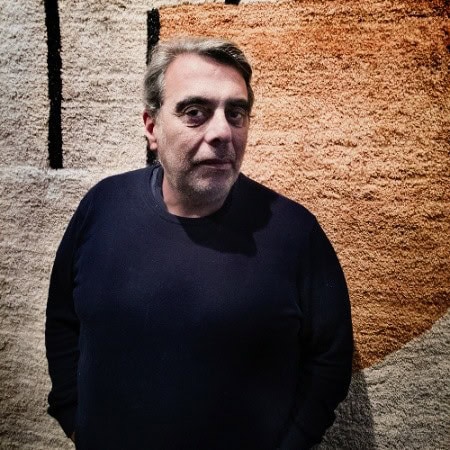
Our family business began with my grandfather around 1878. At that time, Jews in Mashhad were not allowed to work freely in Persia, so he initially moved to Merv, in Turkmenistan, where he bought carpets in the bazaar from Turkmen tribes. He later moved to Samarkand in Uzbekistan, where, in addition to carpets, he acquired textiles such as ikats and suzanis, which he sold through his contacts to importers in London.
My father arrived in Milan shortly after World War II and was among the first wholesale dealers specializing in antique carpets. I used to visit the warehouse as a child, playing among the piles of carpets. After high school, I went to study in New York, where I earned a degree in Chemistry. Upon returning, my first job was as the Italian representative of an American chemical company. I used part of the carpet warehouse as my office, and this allowed me to meet many figures from the older generation.
It was the mid-1980s, the height of the economic boom, and the carpet market was thriving. There was a special energy in the air—an enormous enthusiasm for our field. I started getting curious and reading books about carpets, while at the same time falling out of love with chemistry. I had dreamed of being a scientist, but I was slowly becoming a chemical sales rep. Trading in carpets seemed like a much more exciting prospect.
My father realized I was becoming passionate and gave me a budget for a solo trip to New York to look for antique carpets. It was a classic case of beginner’s luck: I found the unfindable. In the evenings, I would browse through a Herrmann catalogue (I still remember—it was Volume VIII), dreaming of finding something similar, and the next day, it would come true! I earned in one trip what I would have made in a year working with chemicals and experienced that special thrill one feels when discovering a unique piece. At that point, there was no turning back.

What influenced my decision the most, however, was discovering that the carpet world wasn’t just about business, but also about culture. I soon became passionate about Persian tribal rugs and began a path of research that led me, in 1990, to present a paper at the ICOC in San Francisco. I also published my work in Hali, which at the time was the only magazine dedicated to our field. I had managed to strike the ideal balance between being a dealer and a scholar.
I participated in many other conferences and wrote regularly for Hali as a Contributing Editor. In 1997, I was elected Chairman of the Organizing Committee of the 9th ICOC, which took place in 1999 in Milan, Florence, and Venice—a truly memorable event.
In the meantime, I had opened my gallery, initially focused solely on antique carpets and textiles. I traveled the world searching for rare pieces, but New York remained my first love and the city that gave me the most satisfaction. A few months before opening my gallery, I found there a rare and magnificent 16th-century Karapinar carpet—a piece I loved so much I had its image printed on the cake for my 40th birthday.
The antique carpet world seemed to have reached its peak, represented by prestigious international collections. From ikats and suzanis to kilims and Anatolian rugs, beautifully published in catalogues, these acted as a driving force for a market that was becoming increasingly sophisticated.
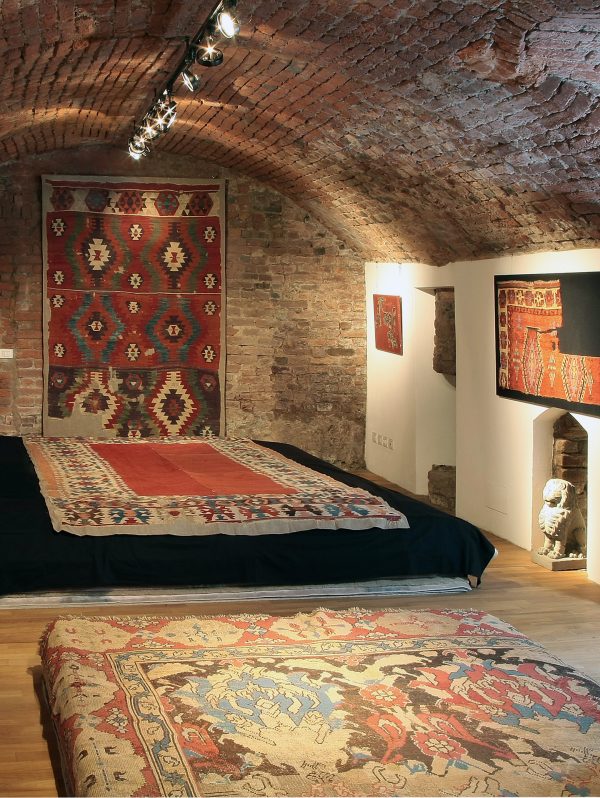
On one hand, the market began to focus more clearly on distinguishing rare rugs from common ones. On the other, it faced a growing scarcity of available pieces and, most crucially, a generational shift. With the new millennium, I began to sense a change. Young people no longer showed the same passion their parents had for antiques. Tastes were shifting. I remember many young people being amazed by a plain-colored contemporary Tibetan carpet—and the fact that it could be ordered in any color or size. We moved quickly from maximalism to minimalism.
The only antique pieces that caught their attention were those with a minimal or abstract character: flatweaves and Gabbehs from Fars, some rare Tibetans, long-pile Anatolian rugs like tülü and filikli, and other primitive tribal works. Meanwhile, technology allowed contemporary carpets to take great strides forward.
Almost without realizing it, I began dedicating more space in my gallery to the constant innovations of the contemporary market, transforming the space into one dedicated to collections by major designers—alongside which I soon presented our own productions. Of course, I continued dealing in antique rugs, focusing on collecting examples of specific types to later present in themed annual online exhibitions.
In Hunting and Gathering, I showcased a group of Chinese, Tibetan, and East Turkestan pieces acquired on my travels. In Like a Prayer, I offered for sale my personal collection of Turkish prayer rugs, assembled over the course of my career and through which I learned to connect with the magic of old Anatolian carpets.
During the COVID period, I kept busy by assembling a collection of Persian and Transcaucasian tribal pieces, purchased via digital images sent by contacts around the world. Putting together this exhibition helped me through a difficult time of isolation, keeping me connected to friends, clients, and suppliers while training my critical eye.

After the pandemic, I launched an exhibition of one hundred pieces titled From Eurasia with Love – Antique Tribal Textile Art from Persia and the Transcaucasus, which was a tremendous success. Many pieces were sold directly from my website, while others were presented at the only two exhibitions I still attend: ARTS, held every October at the Motel Capri in San Francisco (of which I am a founding member), and the Carpet & Textile Forum, another annual gathering of antique carpet enthusiasts, held in spring in the sunny setting of Santa Ynez, California.
Looking ahead, we are planning the next edition of ICOC for summer 2027 in Milan, celebrating 50 years of international conferences and bringing a dedicated carpet event back to Europe. For this occasion, I’m working on a book for a special exhibition I intend to present at the event, and I’m also helping to organize other side shows.
I still have the same passion I had in the beginning and plenty of energy to dedicate to this wonderful world. It is truly a great privilege to practice a profession that one truly loves.
–
Interview conducted by Ivan Soenderholm for Jozan Magazine. Translated and edited with permission from Alberto Levi.
Alberto Levi Gallery, Via San Maurilio 24, 20123 Milano – email gallery@albertolevi.com